Division of Air Quality
Wildfire Smoke
Smoke from wildfires is a major pollution source in Utah and can be hazardous to your health. Keep informed of current conditions and forecasts. The source of the smoke may be a wildfire in another state. Also see nationwide wildfire smoke impacts and recommended actions to protect yourself below.
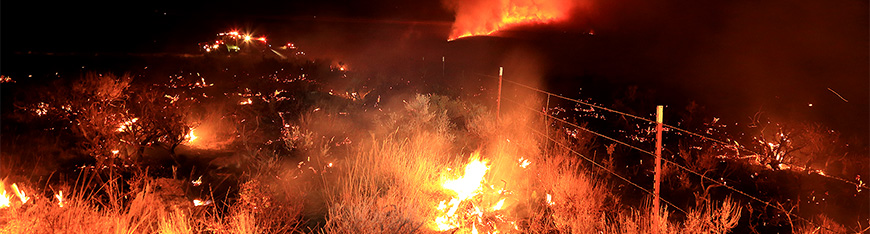
Fine particles (PM2.5) from wildfire smoke pose the biggest health threat.
Wildfire smoke can make outdoor air unhealthy to breathe. Even if you stay indoors, outdoor smoke can enter your home. If you are close to a wildfire, the fire itself, as well as heavy smoke and ash, can pose serious, immediate risks to your safety and health. You may also be exposed to smoke even if the fire is far away.
Smoke is made up of a complex mixture of gases and fine particles produced when wood and other organic materials burn. Fine particles (PM2.5) from wildfire smoke pose the biggest health threat to people. These microscopic particles can get into your eyes and respiratory system, whether you are outdoors or indoors. They can cause health problems such as burning eyes, runny nose, and illnesses such as bronchitis. Fine particles also can aggravate chronic heart and lung diseases, and are even linked to premature deaths in people with these conditions. If you are healthy, you’re usually not at a major risk from short-term exposures to smoke. Still, it’s a good idea to avoid breathing smoke – both outdoors and indoors – if you can help it.
Symptoms
Smoke can irritate the eyes and airways, causing coughing, a scratchy throat, irritated sinuses, headaches, stinging eyes or a runny nose. Individuals with heart or lung disease, such as congestive heart failure, angina, chronic obstructive pulmonary disease, emphysema, or asthma may experience health effects earlier and at lower smoke levels than healthy people. People with heart disease might experience chest pain, palpitations, shortness of breath, or fatigue. Those with respiratory diseases may not be able to breathe as deeply or as vigorously as usual, and may experience symptoms such as coughing, phlegm, chest discomfort, wheezing and shortness of breath. When smoke levels are high enough, even healthy people may experience some of these symptoms.
Older adults are more likely to be affected by smoke, possibly because they are more likely to have heart or lung diseases than younger people. Children also are more susceptible to smoke because their respiratory systems are still developing, they breathe more air (and consequently more air pollution) per pound of body weight than adults, and they’re more likely to be active outdoors.