Division of Environmental Response and Remediation
Historic Mayflower Mine
"We live in a mining state, and while that legacy was once a catalyst for growth, it has left us with the unintended consequences of past practices," observes Brent Everett, Director of the Division of Environmental Response and Remediation (DERR) at the Utah Department of Environmental Quality.
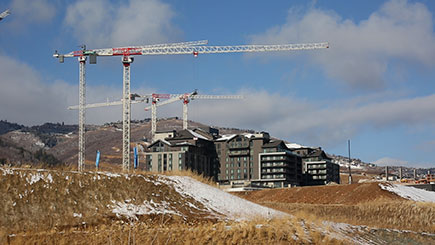
Nowhere is this legacy more evident than the historic Mayflower mine. According to the Park City Museum website, "The Mayflower was hot, wet and full of gold. Altogether during the mining years, Park City produced 45 tons of gold, most of it from the Mayflower...by 1966 the U.S. Bureau of Mines reported the Mayflower as the United States sixth biggest gold producer."
However, that historic production left behind significant mine waste. In 2017, Extell Development purchased the Mayflower property, fully aware of the contamination from historic mining operations. To safely transform the blighted land, Extell partnered with the DERR through the Voluntary Cleanup Program (VCP).
"This is really a classic example of using a tool that we were given by the legislature ... and working with our partners to find a solution to an environmental problem," says Bill Rees, DERR Program Manager. Rees notes the project represents "the intersection of environmental protection and economic development."
Remediation required extensive work. Contaminated soil was removed, consolidated, and safely secured under an engineered, two-foot-thick asphalt cap that now serves as the resort’s main parking lot. Managing water was also critical. DERR planning consultant David Bird explains that water exiting the old mine workings was piped and rerouted. This ensured "clean water was then ultimately flowing to the Jordanelle Reservoir," adds Rees.
The VCP allows owners to collaborate with the state at a self-guided pace. "They get what's called a certificate of completion at the end of their cleanup project with oversight by the state agency," Everett explains, providing certainty that the land meets public health standards.
In December 2025, that Certificate of Completion was officially issued, closing out the project. Today, the once-uncontrolled site serves as a vital economic anchor.
"I think it's a great example of going from an area that was not really being used to being an area that is now supporting ski runs, ski lifts, a resort, various hotels and amenities," Bird says.
As Everett summarizes, the remediation allowed the site to become "kind of like the Phoenix rising from the ashes."