Division of Waste Management and Radiation Control
Recycling in Utah
Learn where to recycle in Utah and review recycling data by exploring the map below.
Related Links

What’s OK to put in your recycling bin?
Safely recycle these top 6 materials. Keep in mind that some facilities may accept additional items for recycling. You can contact your city or the recycling company that services your home for questions about curbside recycling.
What about other materials (non-blue bin recyclables or waste)?
Find info about specific materials below, and use the Utah Recycling & Waste Facility Map to find locations to drop off hard-to-manage materials such as used oil (filter by "Used Oil Collection Center" facility type) and lithium-ion batteries (use the "Find a battery drop-off location" link in the right-side panel).
Bring other hard-to-manage materials like electronics, batteries, styrofoam, and more to a collection event near you. See the list of events further down on this page.
Find take-back programs to manage electronic waste (e-waste), depending on the manufacturer of the product. Examples of electronic devices that may be recycled through these programs include: televisions, monitors, laptops, computers, cell phones, and tablets.
You can also take e-waste to an R2 certified electronic recycler. These facilities safely handle used electronics and the sensitive data that they may contain.
Find a drop off location for lithium batteries such as e-bike batteries and power equipment batteries.
Learn more about safe battery disposal from Woodsy Owl.
Find a glass recycling drop-off location or sign up for curbside glass recycling.
Read our Statewide Glass Recycling Study Report to learn more about glass recycling in Utah.
Household hazardous waste is anything in and around your home that is poisonous, flammable, corrosive, or toxic. Products such as paints, cleaners, yard care chemicals, fuels and pesticides require special care when you dispose of them.
Find household hazardous waste collection centers using our Utah Recycling & Waste Facility Map and filtering by the “Household Hazardous Waste (HHW) Collection Center” facility type.
Used oil is oil that has been used and as a result of the use is contaminated such as oil removed from a vehicle during an oil change. There are over 400 locations throughout Utah accept used oil for recycling, known as used oil collection centers. Most of these locations are private businesses that have volunteered to collect used oil as a service to their community.
Find used oil collection centers using our Utah Recycling & Waste Facility Map on UsedOil.utah.gov, filtering by the “Used Oil Collection Center (UOCC)” facility type.
Consider selling or donating appliances, tools, or clothing instead of sending them to the landfill.
Search for facilities that can accept other materials by type using Earth 911.
Find take-back programs to manage electronic waste, depending on the manufacturer
Examples of electronic devices that may be recycled through these programs include televisions, monitors, laptops, computers, cell phones, and tablets.
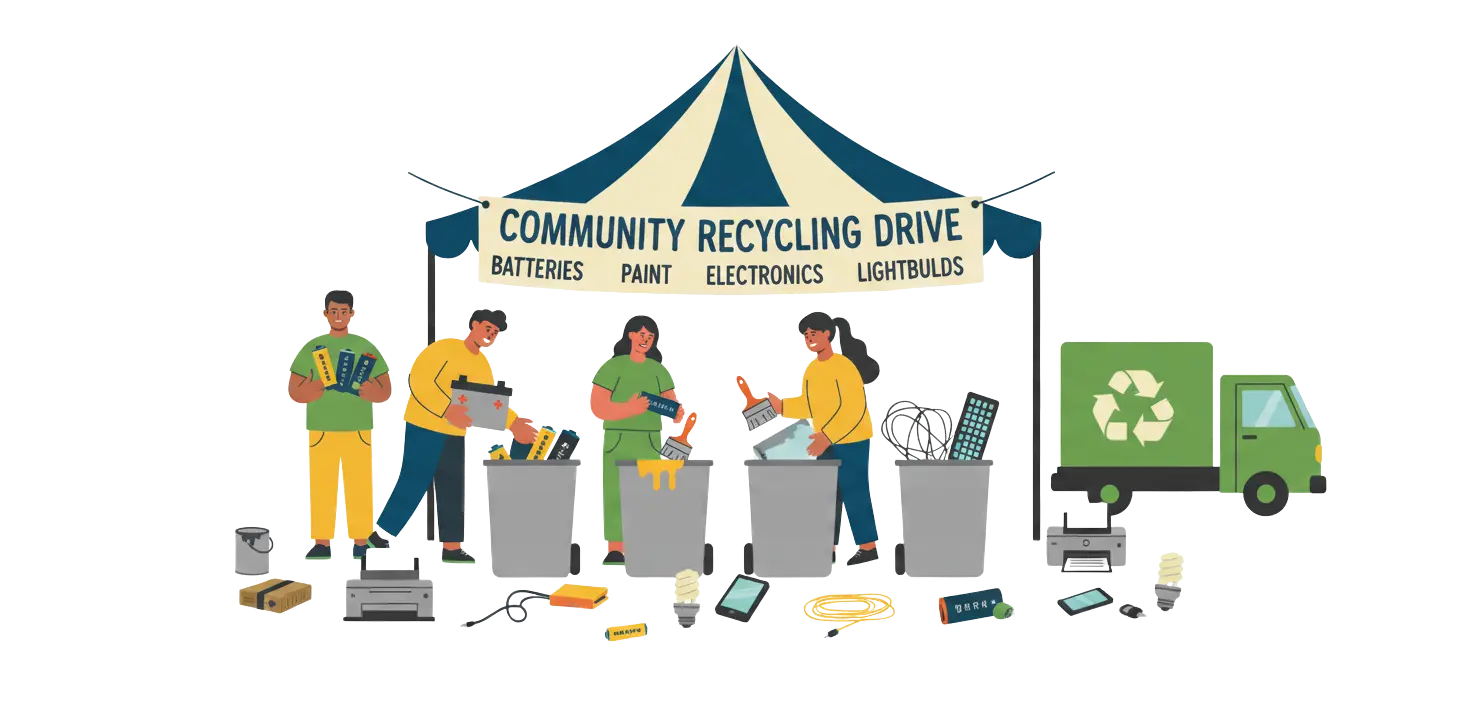
Upcoming community collection events
Bring your hard-to-recycle materials to a collection event near you.
No known events at this time.
How much energy does recycling save?
Choose a material
Choose an appliance
The process of recycling turns waste materials into new products, helping to reduce pollution, create jobs, conserve resources, and save energy. In fact, recycling one ton of paper saves approximately 7,000 gallons of water, 380 gallons of oil, 17 mature trees, 4100 kilowatt hours of energy, and 60 pounds of pollutants. 1 2
Utah’s Recycling Data Initiative collects statewide data on waste produced by households, institutions, and businesses (called municipal solid waste) and where that waste ends up (e.g. at a recycling facility, composter, or landfill). Our 2023 data indicates that while most waste sent to recycling facilities is recycled, Utahns are not sending their recyclable material to these facilities.
The data
The 2023 data collected found that while the vast majority of material sent to recycling facilities was recycled, only a small percentage of waste generated in Utah was sent by consumers to a recycling facility. This means that when Utahns recycle it is effective, but there is a lot of opportunity to increase recycling participation and access.
In 2023:
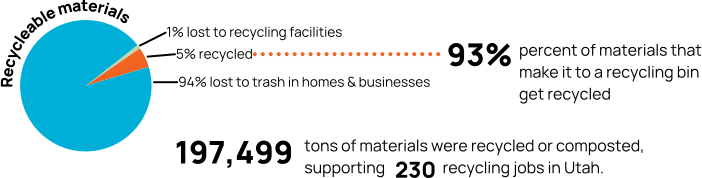
- Only 5% of waste produced in Utah was recycled, composted, or managed by anaerobic digestion/codigestion – 1% was lost at recycling facilities, and 94% was sent to a landfill.
- 197,499 tons of material was recycled or composted, equal to approximately 230 recycling jobs in Utah.3
- 93% of materials sent to recycling facilities were recycled.
Potentially recyclable materials
More stats
What it means
We, the consumers, are not getting our materials to recycling facilities. The majority of Utah waste ends up in garbage bins instead of recycling bins. If the material reaches a recycling facility, the majority of the material is able to be recycled. This means that we generally put the correct materials in our recycling bin, and when it gets to the recycling facility it is properly recycled, but we’re not sending nearly as much of our waste for recycling as compared to the rest of the nation, which has a recycling rate of 32%.4
What’s next
Based on this data, there is a need to increase how much material Utahns are sending to recycling and composting facilities. Cities and towns can take action by assessing the availability and use of recycling bins in their area, and any other barriers to recycling that exist.
There is a need to increase confidence in recycling – remember that our recyclable materials are headed off to a new life, not the landfill!
Frequently Asked Questions (FAQ)
Why should I recycle?
Recycling reduces pollution, creates jobs, conserves natural resources, and saves energy. It reduces our impact as consumers by giving materials a new life, preventing the need to source new materials through processes that use land, fossil fuels, water, and use natural resources like trees. By recycling, we are helping protect our beautiful state and ensure its vitality for future Utahns.
Why is Utah collecting recycling data?
This data helps us understand how well Utah recycles, where there are opportunities for improvement. It also gives us the ability to track our progress over time.
Do the products we put in the recycling bin actually get recycled?
Through our data initiative, we found that 93% of material received by a recycling facility in Utah is recycled. Our recycling facilities are expert recyclers. To ensure that the materials you put in the recycling bin make it through the process, prevent contamination by familiarizing yourself with what can be recycled in your area, starting with the Super6 items that can be recycled almost anywhere.

Why don’t some things get recycled?
The biggest reason for material not getting recycled is at the consumer step – that they don’t make it into the recycling bin, and the majority of recyclables end up in the landfill.
What can I do to improve Utah’s recycling rate?
Share this data and our recycle.utah.gov recycling map with others. Help get the message out that Utah needs to increase availability and use of recycling resources. When we put recyclable material in a recycling bin, it gets recycled, but it won’t be recycled if we don’t (or can’t) take this first step.
How is Utah’s recycling rate being calculated?
Utah’s recycling rate is the percent of the total municipal solid waste (MSW) generated in Utah that is recycled, composted, or managed by anaerobic digestion/codigestion (AD/C) in a calendar year. The Division gathers this data through annual reports submitted by landfills, composting facilities, and recycling facilities.
Utah’s Annual Recycling Rate = (MSW Recycled + MSW Composted + MSW Managed by AD/C Total MSW Generated) * 100
Is Utah’s method to calculate recycling rates comparable to the method used on the national level?
Yes! We carefully developed our recycling rate and data collection methods so Utah’s data can be readily combined with national data to track and improve recycling on the national level.
Footnotes
- Utah State University. Recycling Facts and Figures ↩︎
- The U.S. Environmental Protection Agency. Recycling Economic Information (REI) Report. ↩︎
- The U.S. Environmental Protection Agency. Recycling Economic Information (REI) Report. ↩︎
- The U.S. Environmental Protection Agency. National Overview: Facts and Figures on Materials, Wastes and Recycling ↩︎
Stay up to date and sign up for our recycling email list.
Questions?
Contact the Division of Waste Management and Radiation Control at (801) 536-0200