Division of Water Quality
Great Salt Lake
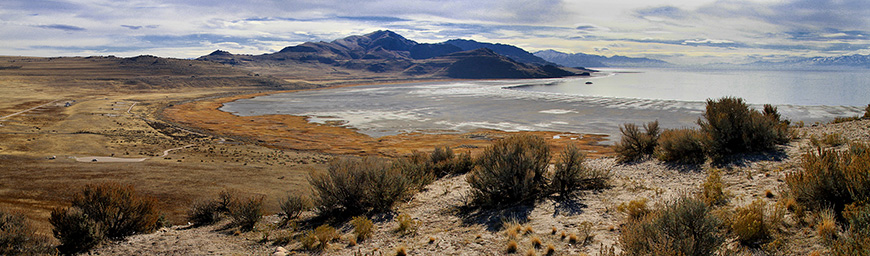
Great Salt Lake (GSL) provides a unique ecosystem found nowhere else in the United States. It is the largest saltwater lake in the Western Hemisphere, and one of a handful of terminal lakes in the world. The lake boasts a rich ecosystem that supports a wide range of terrestrial and aquatic life and serves as critical habitat for resident and migratory birds.
The ecological diversity of 1,700-square-mile lake, from its highly saline North Arm to its freshwater Farmington Bay, provides food for the more than 7.5 million birds who stop there during their migration along the Pacific Flyway or make the lake their home. The lake also provides enormous economic benefit to the state, contributing over $1 billion a year to the economy from lake-based industrial and recreational activities.
The lake’s unique qualities create opportunities and challenges to safeguarding its ecological systems and resources. The chemical and biological conditions found in GSL complicate the development and implementation of appropriate water-quality criteria. In addition, water diversions, lower lake levels, and potential changes to the lake’s salinity place additional pressures on the lake’s aquatic and avian life.
The Division of Water Quality developed the Great Salt Lake Water Quality Strategy to address this need for lake-specific data and conditions. The Strategy provides the framework for monitoring water quality, developing water quality standards, and identifying lake-specific management policies that protect the lake’s beneficial uses.

Strategy
Review the Great Salt Lake Strategy, a roadmap for lake management that ensures balanced decision-making on issues affecting the lake.

Standards
Learn how the Division of Water Quality develops and implements standards to protect water quality in the GSL.

Permitting
Find out how discharge permits protect the designated uses of the lake.

Monitoring
Learn more about DWQ’s sampling program on the GSL and track monitoring updates.

Great Salt Lake Advisory Council
Learn about the Council’s activities to promote sustainable use, protection, and development of GSL.