Division of Water Quality
Proper Disposal and Recycling of Mercury
It is critical that mercury be properly disposed of to ensure the protection of humans, wildlife, and the environment.
- Your local health department may take mercury-containing household items. Call before you go to make sure they accept mercury and to learn how to prepare your items.
- Visit our Mercury Collection Events page to find upcoming dates and locations for free collection events, if we have any.
- Learn about storing, transporting, and disposing of mercury in your home (EPA).
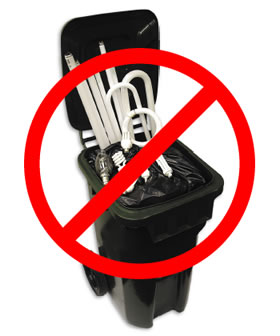
Mercury is a nerve toxin and is considered a hazardous waste. When products containing mercury are placed in the trash, the mercury doesn’t disappear, it finds its way into the environment. That’s why mercury-containing products should not be disposed of with regular trash or poured down the drain. Mercury products and compounds must be recycled or managed as a hazardous waste.
Households have a low to no-cost method to properly handle mercury products at the end of their useful life. Towns and solid waste districts hold hazardous waste collection events every year. Households and small businesses can contact their local municipality or solid waste district for more information and collection event scheduling.
Get more information on mercury-containing products, including how to dispose of them properly:
- Fluorescent and Other Mercury-Added Lamps
Included compact fluorescent light bulbs. - Mercury-Added Button Cell Batteries
Mercury is still used in many button cell batteries. - Mercury-Added Switches
Used in products such as appliances, vehicles, and sump and bilge pumps. - Mercury Flame Sensors or Temperature Probes
Used in products such as gas appliances and ovens. - Pressure and Other Mercury-Containing Gauges
Barometers, hydrometers, hygrometers, vacuum gages, etc. - Storage of Mercury-Added Products
For commercial/institutional facilities. - Thermometers
There are many types of thermometers used for many applications. - Thermostats
Mercury thermostats should not be disposed of in regular trash.
If you have a mercury spill, see the mercury spills page. For information on broken lamps, see the Lamp Fact Sheet.