
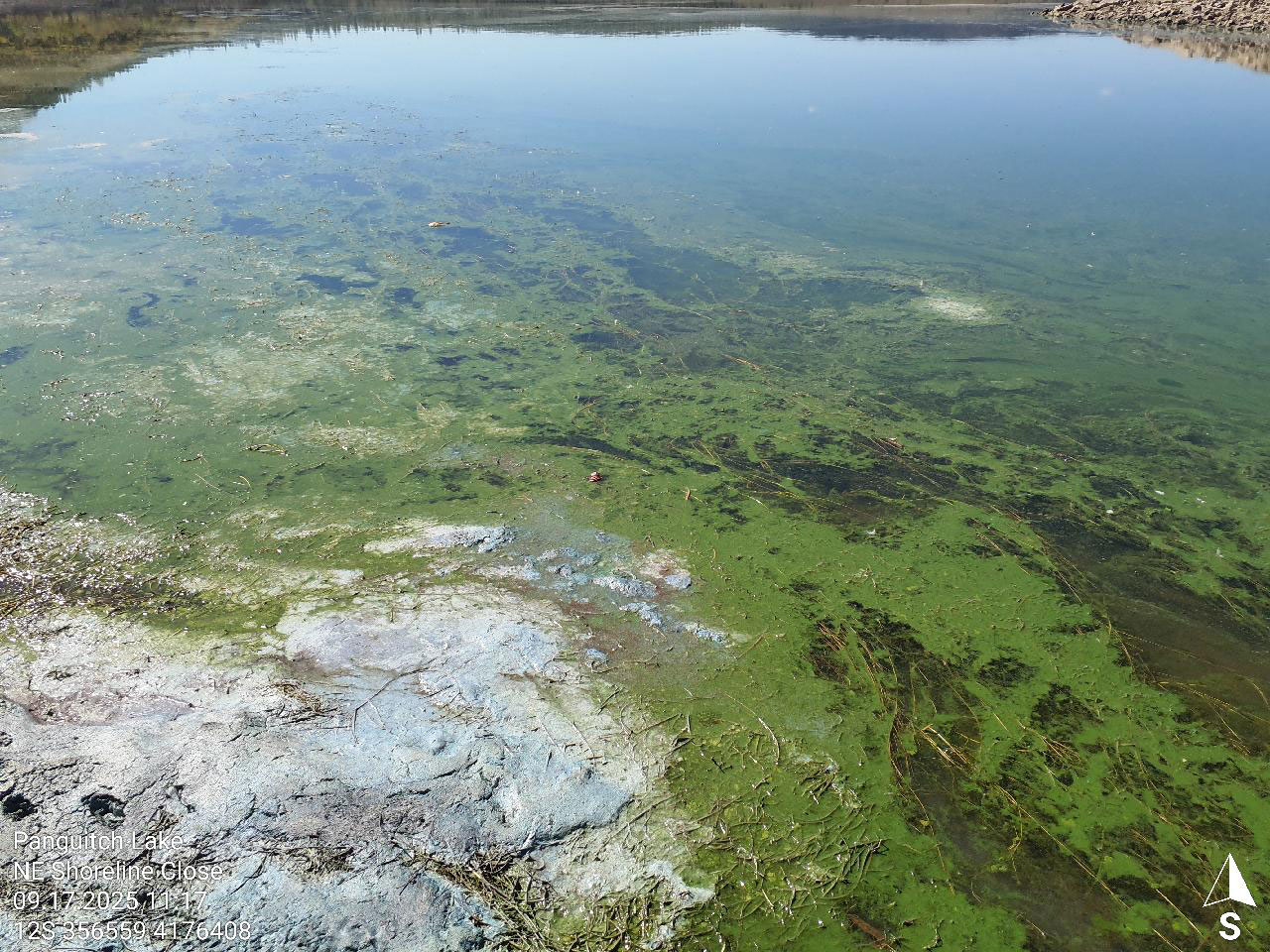
Panguitch Lake is cherished for its beautiful shores, excellent fishing, and relaxing atmosphere. Unfortunately, the beloved lake has been struggling. Since the early 1980s, the once-blue waters have increasingly turned green each summer due to Harmful Algal Blooms (HABs).
These aren’t just aesthetic issues. HABs are caused by an overgrowth of photosynthetic bacteria called cyanobacteria, which can release dangerous toxins into the water, posing risks to people, pets, and wildlife.
What fuels HABs?
Cyanobacteria exist naturally, but blooms occur when they grow rapidly. This rapid growth is fueled by two main factors: warm water and too many nutrients (specifically nitrogen and phosphorus) entering the lake.
While nutrients exist in small amounts in healthy lakes, an excess acts like a massive fertilizer, triggering and sustaining HABs. At Panguitch Lake, the primary sources of these excessive nutrients include:
- Septic system drainage
- Livestock grazing
- Soil erosion
- Legacy nutrients recycling from the lakebed
What can I do to help Panguitch Lake?
Restoring the blue waters of Panguitch Lake requires all-hands on deck. The Division of Water Quality and local partners have been hard at work to address this issue. We are managing the legacy nutrients in the lake by installing a deepwater siphon to drain some of the nutrient rich bottom water from the lake. We are also reducing the impact of livestock grazing by installing fencing around portions of the lakebed.
These steps will help to reduce nutrients, but additional work is needed. Over 700 residences exist around the lake, all of which use septic systems to treat household waste. Septic systems are a significant source of nutrients to the lake, accounting for 22% of the external phosphorus load (DWQ 2004).
Simple steps to help the lake by improving maintenance of your septic system
- Inspect your septic system every 3 years. Find and fix small problems before they become big, polluting, expensive problems.
- Pump it out every 3-5 years. Removes the solids that can turn into sludge and clog your system or flow into the lake.
- Use water efficiently in your home. Reduces the volume of water flowing into your drainfield, giving it more time to filter.
- Never flush wipes or chemicals. These items can clog the system, and chemicals kill the good bacteria needed for waste treatment.
- Protect your drainfield– don’t park or plant trees on it. The soil needs to be healthy and intact to properly filter wastewater.