Division of Water Quality
Utah Fish Consumption Advisories
Fishing is a great way to get outdoors, and fish make a healthy meal. However, a few fish species from certain waterbodies are not safe to eat or should be eaten less often because they may contain substances that are harmful to people’s health. When this happens, public health officials in Utah issue fish consumption advisories. These advisories offer guidance on whether your catch is safe to eat and how often you can eat it.
Look. Hook. Cook. Before you keep and cook your catch, check the interactive map or the list of advisories below for the latest advisories for your fishing spot.
Search the map for the safest catch
Use this map to search for the latest fish consumption advisories by location.

Benefits of eating fish
Fish are an excellent low-fat food and a great source of protein, vitamins, and minerals. Fish contain healthy omega-3 fatty acids and oils that are hard to get from other types of food. Eating fish supports healthy development in children and can boost overall health in adults.
Good source of protein and healthy fats

Low-fat, filling, and tasty

Promotes healthy brain development

Improves heart health

Strengthens bones

Reduces risk of certain cancers
Here’s a catch. Young children and women who are pregnant, breastfeeding, or planning pregnancy are advised to limit fish in their diet because mercury and other contaminants in certain fish species can affect babies’ brain development. Many of these contaminants cannot be removed by cleaning, trimming fat, cooking, or freezing the fish.
The good news. Many fish in Utah’s public waters have low levels of mercury and other contaminants, and they’re nutritious and delicious. Use the interactive fish advisories map to get safety information for your catch.
Five tips for eating fish safely
- Eat fish that do not have an existing consumption advisory.
- If you fish in a waterbody with a fish consumption advisory, do not eat more than the serving sizes recommended in the advisory. Or, for species with advisories, just fish for sport and use catch-and-release.
- Eat smaller fish. Older and larger fish have eaten more and been in the water longer, so there may be more contaminants in their bodies. Learn which fish have the most and least contaminants here.
- Before cooking the fish, remove the skin and internal organs, which can have higher concentrations of certain contaminants. Keep in mind that mercury and many other contaminants are stored in the meat of the fish and cannot be removed by any cleaning or cooking methods.
What are fish consumption advisories?
A fish consumption advisory offers guidance on whether fish species caught from a specific waterbody are safe to eat and how often you can eat them. Utah’s Department of Environmental Quality tests fish from Utah’s public lakes, rivers, and streams. If mercury or other contaminants are found at high levels, Utah’s Department of Health and Human Services issues advisories for specific fish species and waterbodies.
A fish consumption advisory includes:
- Location: The waterbody that has a fish advisory.
- Species tested: Fish species found to have high levels of contaminants. Species that are not listed either have not been tested at that location or are within levels that are safe to eat.
- Contaminant detected: Type and amount of chemical found in the fish species that was tested.
- Recommended serving: Guidance on how many “servings” of a certain fish are safe to eat.
- For most adults and youth (age 6 to 16), one serving of fish is 8 ounces.
- For pregnant/nursing women or children under 6, one serving of fish is 4 ounces.
What is a serving size?

4 ounces for children and pregnant women
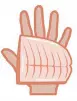
8 ounces for most adults and youth
Use the palm of your hand to estimate serving size.
Enjoy Utah’s public waters with confidence.
Fish consumption advisories are issued to help protect your health while still enjoying Utah’s public waters.
-
Use the interactive fish advisories map to get safety information for your catch.
-
Many lakes, streams, and rivers in Utah do NOT have advisories, and even when an advisory exists, it usually applies to specific species—not all fish in that waterbody.
-
Fishing is still safe and fun. Even in waterbodies with advisories, you can enjoy catch-and-release fishing or other water activities.
Remember: You need a valid Utah fishing license to fish in all public lakes, rivers, and streams. Visit the Utah Division of Wildlife Resources website to buy one online.
Common contaminants and health effects
Visit the links below to learn more about arsenic, mercury, PCBs, and other contaminants that are sometimes found in fish, the health risks associated with them, and how Utah issues fish consumption advisories for them.
Utah DEQ contaminant information
Other resources
- Mercury ToxFAQs, Agency for Toxic Substances and Disease Registry
- Mercury in your Environment, Environmental Protection Agency
- Mercury in the Environment, U.S. Geological Survey
- Mercury and Health, World Health Organization
- Fact Sheet: Polychlorinated Biphenyls (PCBs), Agency for Toxic Substances and Disease Registry
Public waters in Utah may also have advisories for some types of waterfowl. Learn more about waterfowl advisories.
Contacts
For questions related to fish sampling data:
Utah Division of Water Quality
Jacob Ridgway
[email protected]
(385) 552-0774
For questions about the advisories, health impacts, and monthly meal consumption limits:
Utah Department of Health and Human Services
[email protected]
(801) 538-6191
For general fishing or fishing license questions:
Utah Division of Wildlife Resources
Trina Hedrick
[email protected]
435-790-2283
Find your Local Health Department
Visit health.utah.gov to locate your local health department.